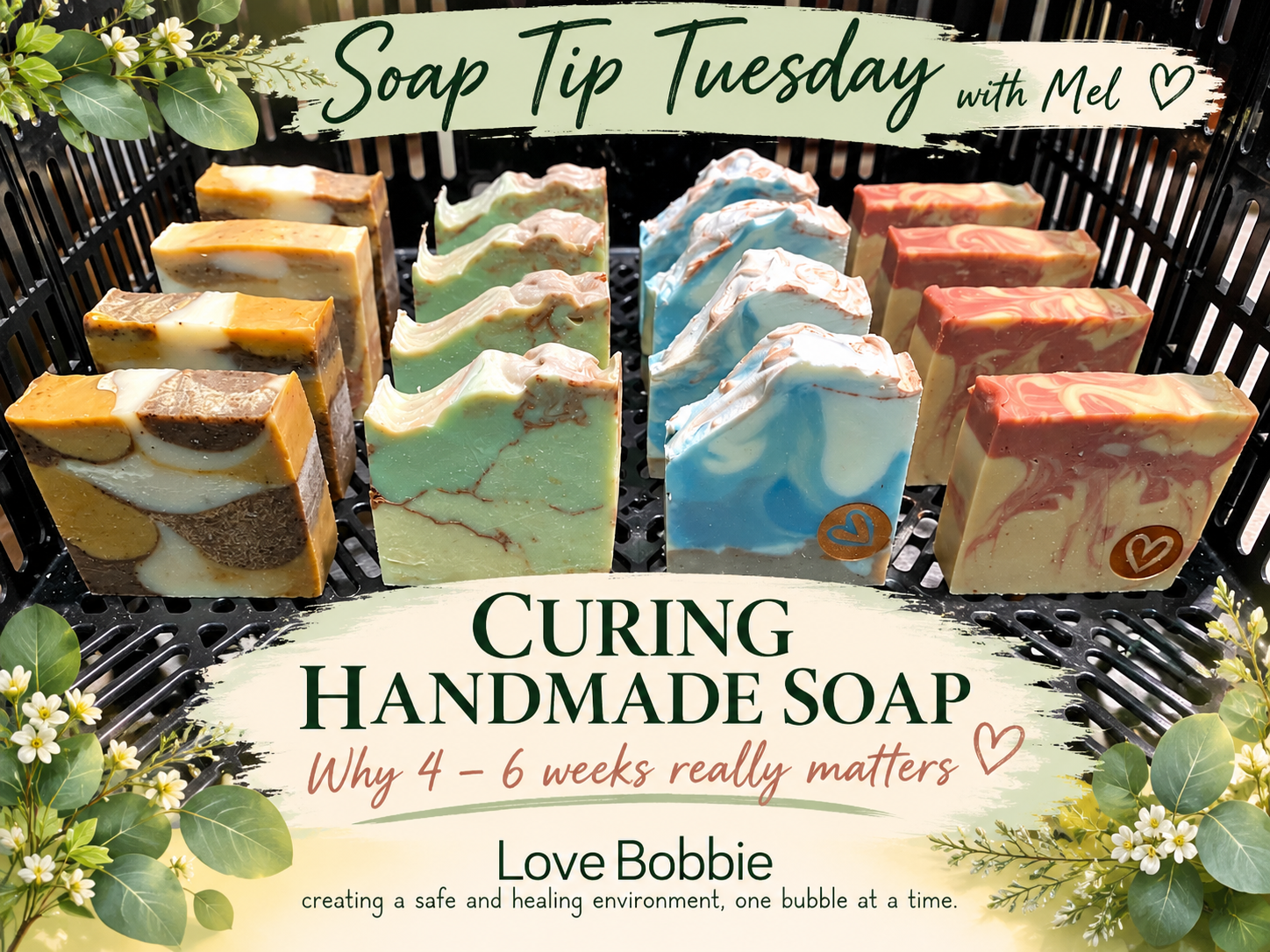
If you’re new to soap making, one of the hardest parts can be waiting. You’ve made your soap, unmoulded it, cut those beautiful first bars — and then I tell you to wait another 4–6 weeks before using them!
So why is handmade soap cure time usually 4–6 weeks?
In this Soap Tip Tuesday, I’m going to explain what is actually happening during the cure, why those weeks matter, and why cure time is about much more than simply waiting for your soap to become safe to use.
What Is Happening While Your Soap Cures?
When cold process soap is first made, the oils and sodium hydroxide begin the chemical reaction called saponification. This is the process that creates soap.
Saponification and curing are related, but they are not the same thing. Your soap does not need 4–6 weeks simply for the sodium hydroxide to “disappear”.
During the weeks that follow, excess water gradually evaporates from the bars and the internal structure of the soap continues to develop. The bar becomes harder, milder and longer lasting, and the quality of the lather can improve considerably.
That is why I teach my students to give their cold process soap a proper 4–6 week cure rather than rushing it.
But My Soap Is Already Hard — Isn’t It Ready?
Not necessarily. A bar can feel very hard only a few days after it is made, but hardness alone does not mean the soap has finished curing.
As the weeks pass, water continues to evaporate from the bar. This generally makes the soap harder and helps it last longer in the shower rather than becoming soft and disappearing quickly.
Cure time also allows changes within the soap’s crystalline structure. These changes can affect qualities such as the feel of the bar and its lather, which is one reason a well-cured soap can perform differently from the same recipe when it is very young.
So when I say 4–6 weeks, I’m not simply waiting for the bar to feel hard. I’m giving that soap the time it needs to become the best bar that particular recipe can be.
How Should I Cure My Handmade Soap?
Once your soap has been unmoulded and cut, place the bars in a cool, dry, well-ventilated area with space around them so air can circulate.
I like to stand or arrange the bars so as much surface area as possible is exposed to the air. Avoid piling freshly cut bars tightly together, and keep them away from excessive humidity, direct sunlight and areas where they may become damp.
During the cure, you can turn the bars occasionally to help expose the different surfaces to the air.
And then comes the difficult part — leave them alone! 😂
Soap making teaches us many things, and patience is definitely one of them. Those extra weeks can make a noticeable difference to the finished bar.
Can I Use My Soap Before 4 Weeks?
A cold process soap may have completed most of its saponification well before the full 4–6 week cure is finished, but that does not mean I consider it a finished bar.
A young soap still contains more water and has not had the benefit of a proper cure. It may be softer, dissolve more quickly and simply not perform as beautifully as the same soap will after several more weeks.
This is why I don’t teach my students to judge readiness by the calendar alone. Good soap making also means using an accurate recipe, weighing ingredients carefully, following the correct process and checking that nothing has gone wrong with the batch.
My rule is simple: don’t rush the cure. You have already put the time and care into making your soap — give it those final weeks to finish becoming the bar you intended to make.
Mel’s Soap Tip
If you make several batches of soap, write the date made and the earliest cure date on a little card beside each batch. It saves trying to remember which loaf was made when — especially when the curing shelves start filling up!
Most importantly, don’t be tempted to rush those beautiful bars. Soap making is both science and art, and sometimes one of the most important ingredients is simply time.
Respect the science. Embrace the art. Enjoy the surprise.
I hope you’ll join me again next Tuesday for another Soap Tip Tuesday.
Mel ❤️
Love Bobbie
Creating a safe and healing environment, one bubble at a time.